
Reflections on Transform 2026
Last week, Alice Benson and Bob McCarthy attended Transform 2026 in Las Vegas, a dynamic global gathering of leaders focused on the future of work. This year’s theme, The Human + AI Equation: Forging the Next Era of Work, drew nearly 4,500 attendees from more than 35 countries and reflected a clear shift in the conversation: from exploration to execution.
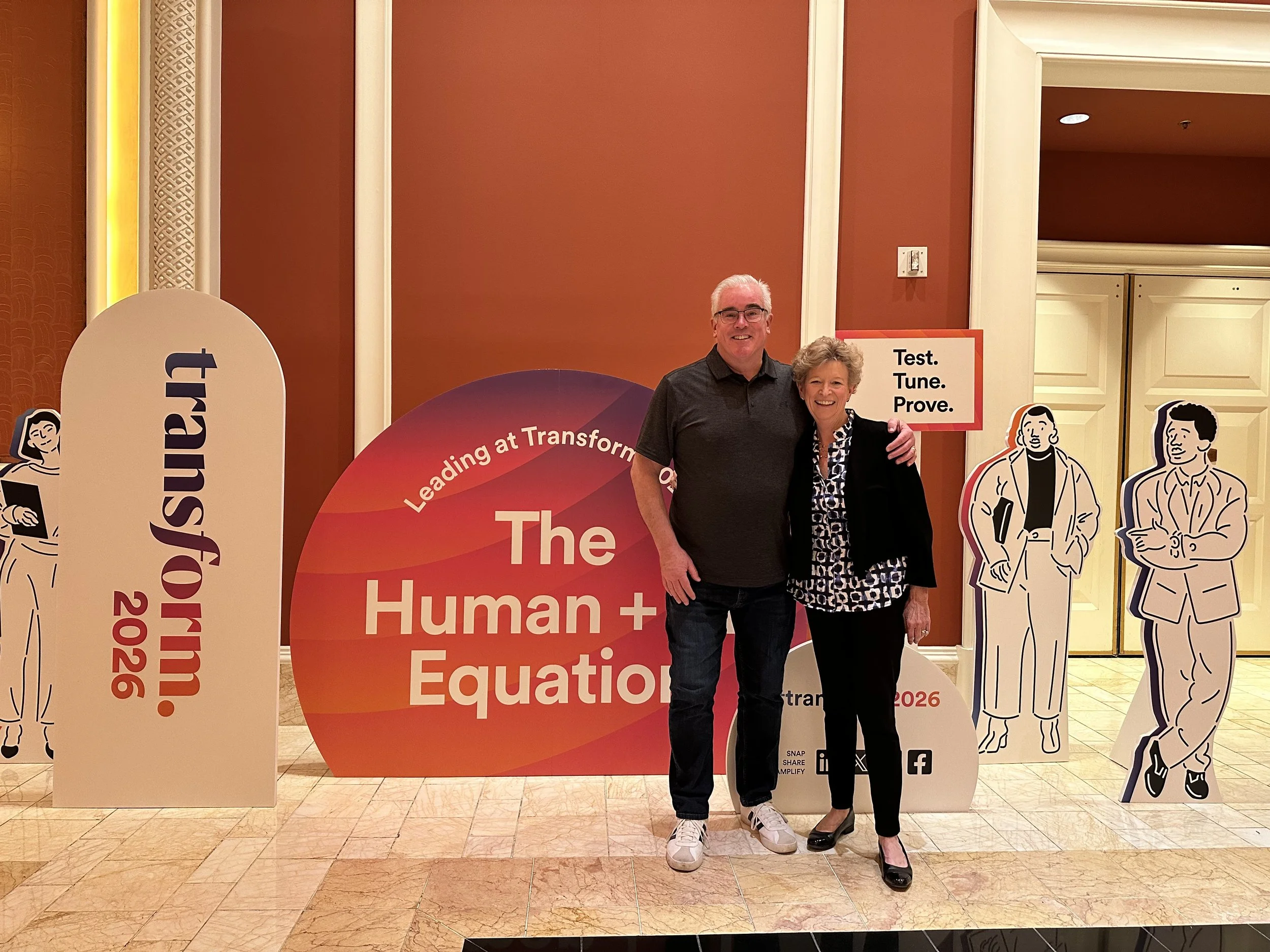
What stood out most wasn’t just the pace of technological change but the growing recognition that we’ve fundamentally reached a leadership moment. Organizations are no longer asking if AI will reshape work. They are grappling with how to lead through it… intentionally, responsibly, and with people at the center.
Across sessions and conversations, a few themes consistently surfaced:
From AI Curiosity to Operational Reality
The dialogue has moved well beyond disruption narratives. Leaders are actively redesigning how work gets done, integrating human and AI capabilities in real time. Performance management is becoming continuous, traditional management layers are being re-evaluated, and skills are emerging as the currency of the modern workforce.
Human Capability as the Differentiator
While technology is advancing rapidly, the organizations best positioned for the future are doubling down on distinctly human strengths including, learning agility, adaptability, judgment, and the ability to operate effectively in increasingly complex, hybrid environments. The competitive edge is becoming less about tools, and more about how people use them.
People Strategy = Business Strategy
Perhaps the most consistent message: the line between people strategy and business strategy has effectively disappeared. Organizations are measuring HR by the organizational capability they enable, and the business outcomes that follow.
AI Transformation Requires Shared Ownership
Successful AI adoption is not owned by a single function. It requires coordinated leadership across HR, IT, and the business, anchored in clear ROI, thoughtful work redesign, and a deliberate focus on preserving culture and connection as differentiators.
CHRO & Boardroom Influence: A Private Forum
A highlight of the week was a half-day, invitation-only CHRO experience which brought together more than 100 senior HR leaders for a focused, candid dialogue on a critical question: how do today’s Chief People Officers build meaningful influence inside the boardroom? The session featured a dynamic panel of some of the most experienced and strategic thinkers, paired with open exchange among peers navigating similar complexity.
What emerged was a clear picture of a role continuing to expand in both scope and expectation:
From Functional Expert to Boardroom Operator
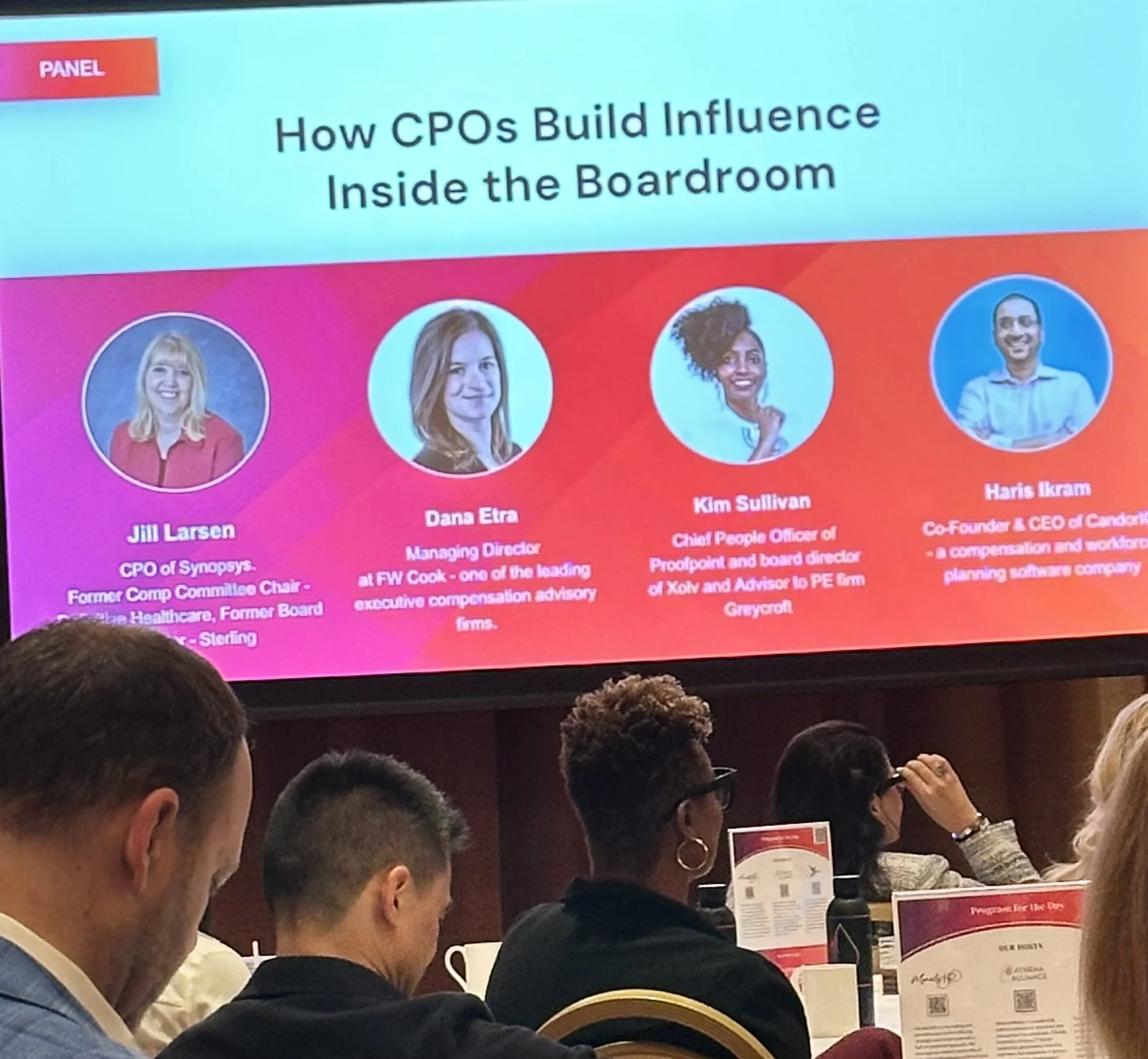
The CHRO/Board dynamic has evolved. Increasingly, Boards are looking for insight and CHROs are expected to bring a forward-looking perspective on leadership pipeline strength, organizational resilience, and the impact of AI on talent and enterprise risk. Influence is built by speaking in the language of the board: outcomes, risk, and value creation.
Talent as a Material Business Risk
What’s abundantly clear is that talent is now firmly a board-level issue. The ability to attract, develop, and retain leaders who can operate in increasingly complex, AI-enabled environments is critical to business continuity and performance.
Earning a Seat Through Strategic Contribution
The most effective CHROs are initiating and shaping strategic conversations. The discussion reinforced that topics like AI transformation, leadership readiness, and culture are core to the business. The CHRO’s role is to connect these elements directly to enterprise value.
Shifting from Reporting to Storytelling
Boards expect a clear, forward-looking narrative. They want to know where the organization is strong, where it is exposed, and how leadership is being built to meet what’s ahead. The CHRO’s ability to articulate that narrative with credibility and clarity is increasingly what defines their impact at the board level.
Taken together, the session reinforced a broader shift: influence in the boardroom is earned through perspective, precision, and the ability to connect people strategy directly to business outcomes.
Looking Ahead
If there was one unifying takeaway, it’s this: the CHRO role is at an inflection point. Leaders are being asked to guide transformation at scale while simultaneously redefining the function itself.
For boards and executive teams alike, the implication is clear: people strategy is central to business performance. And organizations that fail to engage their CHRO at that level are taking on avoidable risk.
We left Transform with the sense that the future of work is HERE. Is your organization prepared? Are you?